Nvidia’s Microduck Robots Surge Past 20,000 Preorders Following GTC Berlin Debut
The open-source robot, now under Nvidia’s corporate umbrella, is positioned to become a dominant holiday consumer product.
By Lucia Herrera ·
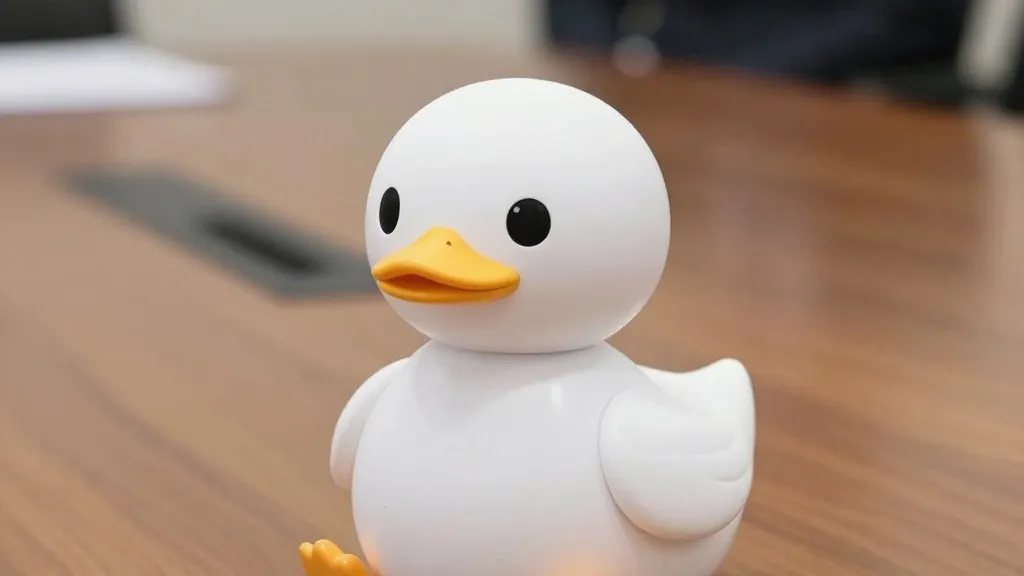
A viral moment at Nvidia’s GTC Berlin conference has transformed a niche robotics product into a potential market leader for the upcoming holiday season. During the keynote, CEO Jensen Huang interacted with a flock of small, autonomous devices that performed synchronized movements and vocalized digital sounds, capturing the attention of both attendees and online viewers. Within 24 hours of the demonstration, preorders for the devices exceeded 20,000 units, according to Clem Delangue, who highlighted the rapid uptake in a recent social media post.
The primary driver for this surge is the product’s timing and appeal. With delivery expected before Christmas, the devices are well-positioned to capture consumer spending during the peak gifting period. Delangue suggests these units could become the best-selling robot of the year, noting that the promotional materials target adults as much as children. This broad demographic appeal distinguishes the product from traditional toy categories, suggesting a wider addressable market for robotics hardware in the consumer sector.
The commercial trajectory of the device is also shaped by recent corporate consolidation. The robots are open-source devices originally produced by Pollen Robotics, a firm acquired by Hugging Face in 2025. Since Nvidia purchased Hugging Face in September, the Microducks now fall under the GPU giant’s corporate portfolio. This acquisition represents Hugging Face’s second foray into physical robotics, following the release of the Reachy Mini, indicating a strategic push by the parent company to diversify its hardware offerings beyond software and cloud services.
From a technical and economic perspective, the devices leverage Nvidia’s existing technology stack for development. The units are pre-trained using simulations to perform basic commands such as walking, sitting, and standing upon purchase. However, the open-source nature of the platform allows owners to program new behaviors and share them with the broader community. This model supports a developer ecosystem that could drive long-term engagement and additional revenue streams through shared content and software integrations.
The market reaction provides a counterbalance to recent negative narratives surrounding artificial intelligence. The industry has faced scrutiny this week due to high-profile cyberattacks attributed to AI involvement, creating a tense atmosphere for technology stocks and public perception. The enthusiastic reception of the Microducks offers a tangible example of AI’s consumer-friendly applications, potentially softening the narrative of risk. For investors, the strong preorder numbers signal strong demand for accessible, interactive robotics, reinforcing the value proposition of Nvidia’s expanded ecosystem.
Looking ahead, the success of the Microducks will test the viability of mass-market consumer robotics. If the holiday delivery targets are met and the community-driven training features sustain user interest, the product could establish a new benchmark for post-acquisition product launches. The integration of Pollen Robotics and Hugging Face into Nvidia’s structure allows the company to leverage its distribution and brand recognition, potentially accelerating the adoption curve for similar devices in the coming year.
Source: TechCrunch